
Cancer Treatment/Preventative with a Cow Connection Needs Investigating
Samuel P. Galphin DVM, MS
Let me provide some background information for this unique chemical. In late 2010 I formed with a partner a unique dairy business called Agri-Science Opportunity (described in other articles on this website). My dairy business partner had just lost his significant other to lung cancer; and, after the grieving process he returned to work intent on finding a cure for lung cancer. When he approached me with his new goal I cautioned him not to make this his life’s purpose. Although he was quite a visionary, he was 74 years old and his background was in real estate. I told him that there were many researchers with strings of degrees behind their names working on cancer and they had not succeeded in finding a cure. Nonetheless, he was determined to try to find a cure himself. He set out scouring the internet for lung cancer information each night. He would print out and bring to work many articles over the ensuing weeks asking my opinion on them. Nothing exceptional really jumped out at me until he brought in an article which described an eighty percent decrease in lung cancer risk in dairymen (1).
When he asked my opinion on this article, I said that it must be a freak occurrence; but, I would investigate the findings. I found that the same results had been repeated in three different publications. We then initiated our own informal survey with various “long-timers” in the dairy industry and concluded for ourselves that dairymen could indeed have only twenty percent or less risk of lung cancer compared to the general population. We began to investigate further and found that the dairymen with more cows showed lower risk than smaller herds; and, that there was not even an increased risk for dairymen that smoked. Another notable finding was that reduced cancer risk did not extend to other livestock producers such as poultry, beef, or pork producers. We theorized the reason only dairymen benefitted was that dairymen were the only livestock producers who were intimate (touched them all) with all their animals every day, at least two times per day all year around. This meant that dairymen were in the cow’s space, able to inhale whatever the cow was putting into the atmosphere every day. By the way, the only cancer that had a reduced risk in dairymen was lung cancer so we expected to find something that could be aerosolized.
While investigations were underway into the reduced lung cancer rate in dairymen; my partner continued to search the internet for other related topics pertaining to lung cancers. He came to me puzzled because there were almost no references to lung cancers in cattle. A lightbulb lit up in my brain as I recognized that cows don’t get lung cancer. This was the first time that I really realized that cows don’t suffer from spontaneous cancers like other mammals. Cows really only suffer from squamous cell cancer eye and bovine lymphosarcoma. These cancers are not cancers resulting from spontaneous mutations of cells as in other animals; they are caused by external forces. Cancer eye is caused by excessive solar radiation in cows with unpigmented eye tissues; and, it can be prevented by solar protection. Bovine lymphosarcoma is caused by a virus; and, it can be controlled by testing and removal of affected carriers. Also of interest is the fact that several other species appear to have no spontaneous cancers such as sheep, goats, deer, and antelopes. These animals are all of the ruminant classification. This was noteworthy because I have training (MS) in ruminant physiology and nutrition.
How are ruminants able to resist spontaneous cancers and how do they transfer this resistance to dairymen? These grew to be the most important questions. For those not familiar, the outstanding characteristic of ruminants is their fermentative digestive system. Ruminants, in contrast to simple stomach animals, have a multi-compartment stomach that ferments feeds; and, as a result the bacteria and protozoa (bugs) in the rumen compartment produce many complex molecules. For example, cows do not have a requirement for twenty amino acids, or three essential fatty acids or numerous B-vitamins in their diet like us monogastrics (simple stomach animals). In the ruminants these nutrients are all made by “bugs” in the rumen. We postulated that in the process of making these essential dietary components, the “bugs” also were making molecules that were heretofore not known to us. The unknown substance had the ability to kill cancer cells before the cells could grow into tumors. The substance could possibly be eructated (burped) into the atmosphere where dairymen would inhale it and receive protection in their lungs. In the ruminant, the unknown substance could also be absorbed into the blood stream and protect them from spontaneous cancers by killing cancer cells before becoming dangerous tumors.
Owing to our knowledge of ruminant physiology we postulated that the substance was an analogue of a B-vitamin. We theorized a molecule that we wished to pursue and began to search the internet. We found a company that was investigating a compound called nitrosyl-cobalamine (NoCBL) which is a NO carrying analog of vitamin B-12. Over the ensuing 3 years we collaborated with this company and helped to obtain a pre-IND (Investigational New Drug) meeting with the FDA (U.S. Food and Drug Administration). We also helped to commercially manufacture the compound meeting the stringent FDA guidelines. In the FDA pre-IND instructions the compound was recommended for use in human glioblastoma cancer, a deadly cancer with no truly effective treatment.
Several studies demonstrated that NoCBL had amazing abilities against cancer (2, 3). It killed many different types of cancer in nude mice test subjects. It also blocked the cancer cell survival mechanism in many cancer types making them susceptible to commonly used chemotherapies designed for those cancers (4). The cancer killing properties of NoCBL were found to be modulated through its “Trojan Horse” nature. Large molecules like Vitamin B12 cannot enter the cells of the body without a process called endocytosis where the cell has a surface receptor specific for transport of the molecule across the cell membrane. The body’s cell receptors could not distinguish NoCBL from normal vitamin B-12 so it carried NoCBL inside the cell. Once inside, the NO separated from the Cobalamin; and, as a free radical it caused damage to cell processes, killing the cancer. The cancer cells have hundreds of times more B-12 receptors than normal cells. The normal cells take up very little NoCBL and the cancer cells take up a lethal dose (5). Our work showed that NoCBL could facilitate the death of many cancer types, including the glioblastoma brain cancer.
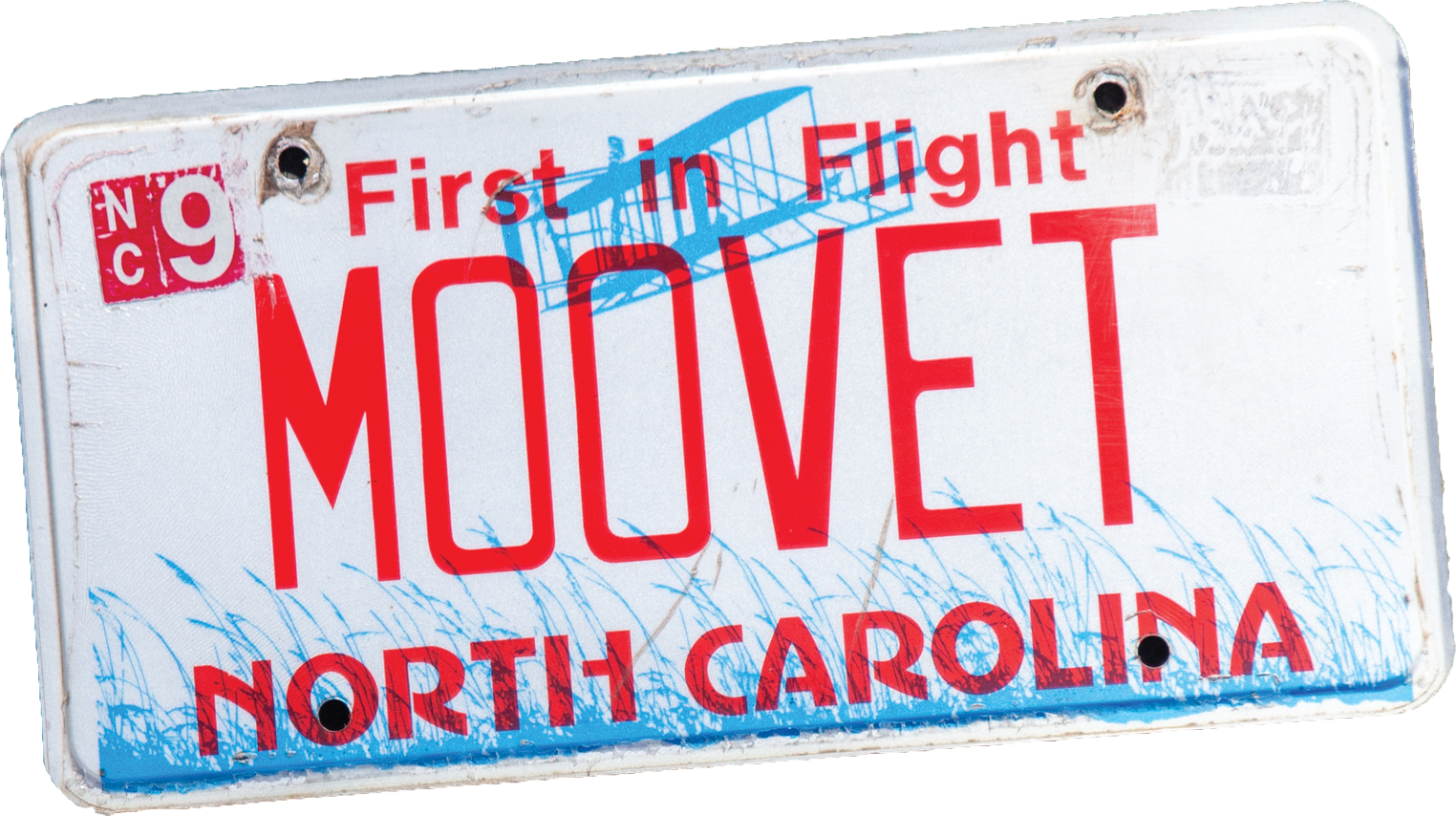
Duke University Cancer Institute contacted us wanting to research this novel new therapy because of its unique mode of action. Duke’s Cancer Center is the top brain cancer center in the world. However, before we could make all of the arrangements to test the product on Duke’s xenographs (cancer cells), my visionary partner passed away and our dairy based research lab had to be moved. As a result all work on NoCBL stopped for more than a decade. Then, 10 years later, in late 2025, I established a new business named MooVet Bioscience, LLC to begin researching Nitrosyl Cobalamin again. Duke University once again has consented to partner in investigating NoCBL. I will once again get product made for testing on Duke’s xenographs in mice. My hope is that the work on this potentially life-changing product can convince Duke University to stay involved with the research until it is tried in humans. In the future I would like to work with other institutions to see if we can find NoCBL in the blood stream or cells of ruminants in order to prove its role in spontaneous cancer prevention in ruminants. Think about it! If this compound acts in humans like it appears to act in ruminants, it will not only be a cancer treatment; but, it will be the first cancer preventive on the market. Over eight billion people would be the potential market.
Bibliography
- Mastrangelo G, Grange JM, Fadda E, Fedeli U, Buja A, Lange JH.; Lung cancer risk: effect of dairy farming and the consequence of removing that occupational exposure. Am J Epidemiol. 2005 Jun 1;161(11):1037-46.
- Bauer JA, Frye G, Bahr A, Gieg J, Brofman P.; Anti-tumor effects of nitrosylcobalamin against spontaneous tumors in dogs. Invest New Drugs. 2010;28:694–702.
- Bauer JA, Morrison BH, Grane RW, et al.; Effects of interferon beta on transcobalamin II-receptor expression and antitumor activity of nitrosylcobalamin. J Natl Cancer Inst. 2002;94:1010–1019.
- Bauer JA, Lupica JA, Schmidt H, et al.; Nitrosylcobalamin potentiates the anti-neoplastic effects of chemotherapeutic agents via suppression of survival signaling. PLoS ONE. 2007;2:e1313.
- Dunphy, Michael; Sysel, Annette; Lupica, Joseph; Griffith, Kristie; Sherrod, Taylor; … [+]A Stability-Indicating HPLC Method for the Determination of Nitrosylcobalamin (NO-Cbl), a Novel Vitamin B12 Analog. Chromatographia, Volume 77 (8) – Mar 14, 2014